myCCC
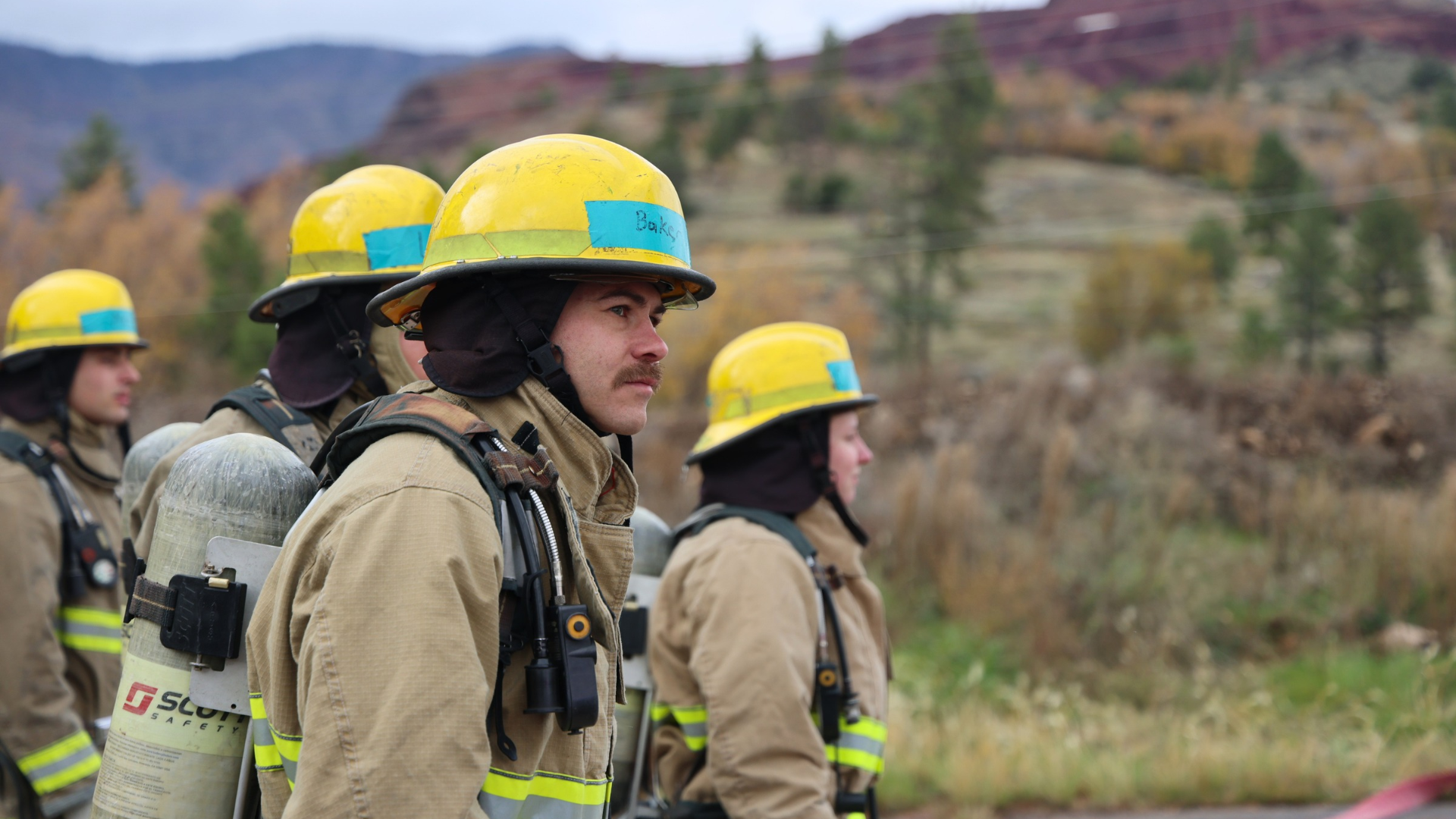

A change in the wind can affect where a wildfire moves. So can the slope of a hill or the trees and grass in its path. At CCC, you can study these conditions and prepare for work on a wildland fire crew.
CCC offers the following programs:
Choose Wildfire Suppression if you want to focus on crew equipment and emergency response. Applied Wildland Fire Science pairs basic firefighting with forestry, mapping, and the study of wildfire risk.
Look for these icons that describe important features of each degree or certificate.
Financial Aid Eligible
In-Person Required
Completely Available Online
Hybrid Required
Evening classes available
Transferrable
Military education benefits eligible
Limited start dates
Financial Aid
Eligible
In-Person
Required
Fully Available
Online
Hybrid
Required
Transferrable
Evening classes
available
Military education
benefits eligible
Learn how wildland crews bring water to a fire with portable pumps and use chain saws to clear vegetation. You’ll study how crews work with aircraft and protect evidence where a fire started. Emergency Medical Technician (EMT) training covers how to care for someone who is sick or injured.
Best for students who want to prepare for work on a wildland fire crew
Financial Aid Eligible
In-Person Classes
Military Education Benefits Eligible
Limited start dates
Skills You Can Build
Students develop skills that can help them:
Psychology connects to everyday experiences, from preparing for an exam to handling a disagreement. Studying it can help you reflect on your own behavior, understand others, and assess the advice you hear about learning, relationships, and well-being.
Study how weather and the plants growing on a slope affect the way a wildfire moves. You’ll identify trees, examine forest soils, and use mapping software to study the landscape. Courses also cover basic wildland firefighting and how to apply for federal fire jobs.
Best for students who want to combine wildfire training with forestry and mapping
Financial Aid Eligible
Hybrid learning required
Transferrable
Military Education Benefits Eligible
Skills You Can Build
Students develop skills that can help them:
Psychology connects to everyday experiences, from preparing for an exam to handling a disagreement. Studying it can help you reflect on your own behavior, understand others, and assess the advice you hear about learning, relationships, and well-being.
The Wildfire Suppression Certificate covers the training for a National Wildfire Coordinating Group (NWCG) Firefighter Type 2 qualification. You also need agency sponsorship and a passing Work Capacity Test. In Applied Wildland Fire Science, Basic Wildland Firefighting (FNR 290) includes introductory NWCG training in fire behavior, crew safety, and incident command.
The Wildfire Suppression Certificate is a distinct career pathway from CCC’s structural firefighting programs. Completing this certificate prepares you for wildland fire employment, not for a position at a municipal or regional fire department. If you are interested in a structural firefighting career, you will want to explore the Fire Science Intermediate Certificate, Fire Science Advanced Certificate, and Fire Science AAS.
These certificates are generally designed to enter the workforce.Some Wildfire Suppression credits can count toward CCC’s Fire Science AAS. The Applied Wildland Fire Science Certificate is designed to lead into further study in applied wildfire science.
If you plan to earn a bachelor’s degree, ask an advisor if your Fire Science courses fit your intended university and major. CCC currently partners with Northern Arizona University and Columbia Southern University for further study in Fire Science.
Your CCC education can be a strong first step toward a career in this field. The careers below show some of the possibilities, but certain jobs may require additional education, experience, certification, or licensure. Use the career outlook tool to explore data for Coconino County or the United States and talk with an advisor or faculty member about the path that fits your goals.
Wildfire Suppression focuses on the work crews do in the field, including using portable pumps and chain saws. It also includes EMT training. Applied Wildland Fire Science combines basic crew training with forestry. It may suit you if you want to study how weather, vegetation, and terrain affect a fire or use maps to understand wildfire risk.
No. Emergency Medical Technician training is required for Wildfire Suppression only. The Applied Wildland Fire Science Certificate has its own set of eight required courses in forestry and wildfire science. EMT is outside that program’s requirements.
The Wildfire Suppression Certificate covers the training for the entry-level Firefighter Type 2 qualification. You also need sponsorship from an agency and a passing score on the Work Capacity Test.
Yes, there is a recommended order to complete the courses based on whether you start in the Fall or in the Spring. Work with an advisor to plan your classes in the correct order.
We are here to help. Complete the form to get in contact with admissions, campus tours, and more.
Our admissions team is ready to get you started. Fill out our free, 10-minute application to build the future you want.