myCCC
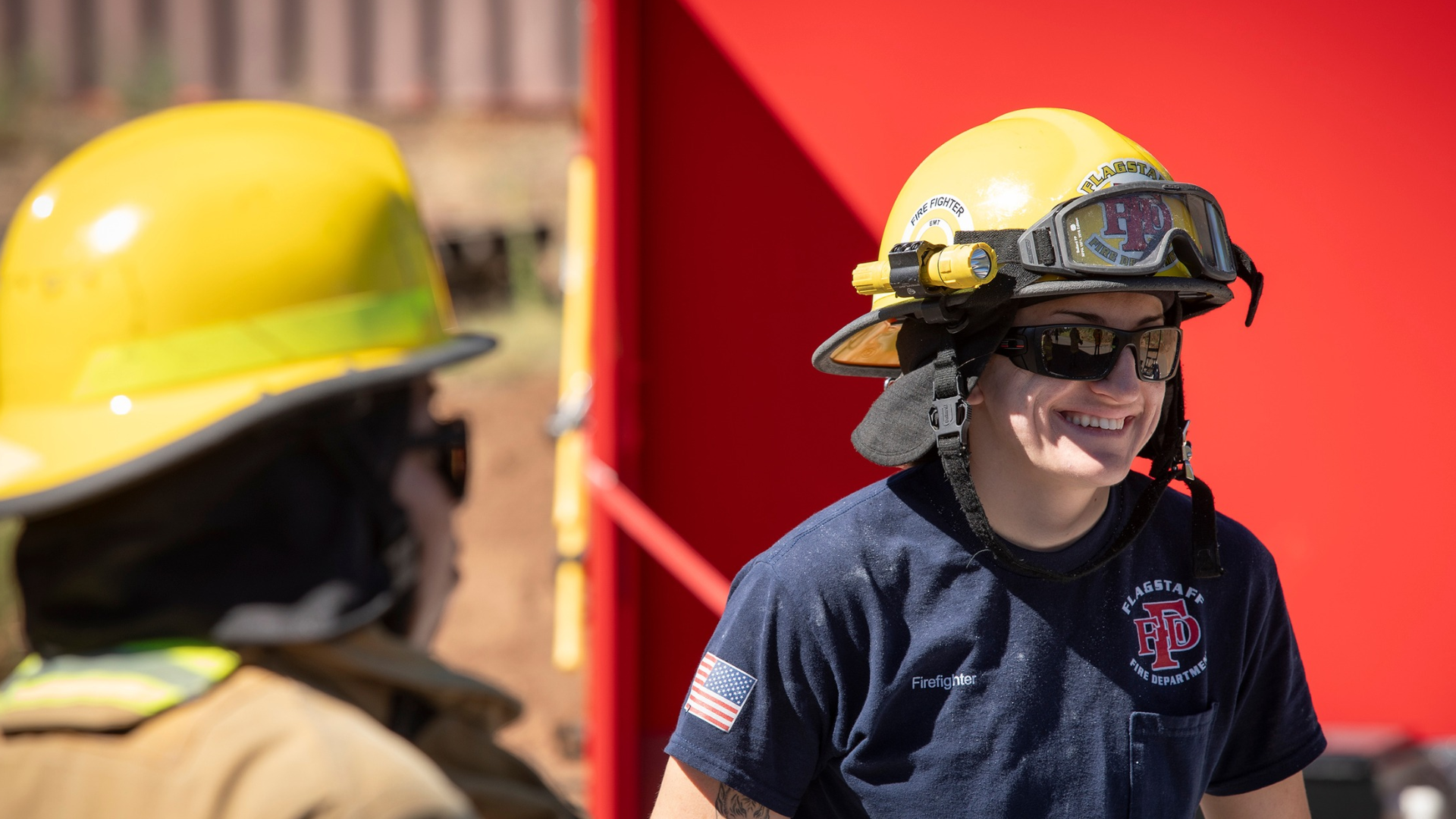

Firefighters need to know how to care for patients as well as how to respond to a fire. At CCC, you begin with emergency medical care and hazardous materials training. As you continue, you’ll study how fires behave inside buildings and what communities can do to prevent them.
CCC offers the following programs:
Each program builds on the one before it in stackable credentials. You can earn the Intermediate Certificate first and use all 24 credits toward the Advanced Certificate. The full 42-credit Advanced Certificate forms the core of the Fire Science AAS. If you have already graduated with a bachelor’s or an associate’s degree in something else, the AAS is automatically applied to you once you finish the Intermediate and Advanced Certificate.
Look for these icons that describe important features of each degree or certificate.
Financial Aid Eligible
In-Person Required
Completely Available Online
Hybrid Required
Evening classes available
Transferrable
Military education benefits eligible
Limited start dates
Financial Aid
Eligible
In-Person
Required
Fully Available
Online
Hybrid
Required
Transferrable
Evening classes
available
Military education
benefits eligible
Learn how firefighters care for people during medical emergencies and recognize hazards such as chemical spills. In the lab, you’ll practice using hoses and ladders and searching buildings for people who need help. You’ll also study how wind and slopes affect a wildfire and how crews work together outdoors.
Best for students who want to prepare for firefighter hiring tests
Financial Aid Eligible
In-Person Classes
Military Education Benefits Eligible
Limited start dates
Skills You Can Build
Students develop skills that can help them:
Psychology connects to everyday experiences, from preparing for an exam to handling a disagreement. Studying it can help you reflect on your own behavior, understand others, and assess the advice you hear about learning, relationships, and well-being.
After the Intermediate Certificate, six more courses introduce you to fire prevention and the way buildings respond to heat. You’ll study how smoke moves through a building, how sprinklers control a fire, and what signs of damage can warn a crew that a structure is unsafe.
Best for students who want to build on basic firefighter training. If you already have a bachelor’s or associate’s degree, you will automatically get the AAS after completing this certificate.
Financial Aid Eligible
Hybrid learning required
Transferrable
Military Education Benefits Eligible
Skills You Can Build
Students develop skills that can help them:
Psychology connects to everyday experiences, from preparing for an exam to handling a disagreement. Studying it can help you reflect on your own behavior, understand others, and assess the advice you hear about learning, relationships, and well-being.
Study how firefighters respond when someone needs medical care, when a building catches fire, or when a wildfire threatens a community. You’ll also learn how fire inspections and building design help prevent injuries before crews ever get a call. The degree combines 42 credits in Fire Science with 19 credits of general education, including writing, math, and science.
Best for students who want to earn a college degree while preparing for the fire service. If you already have a bachelor’s or associate’s degree, you will automatically get this degree after completing the Fire Science Advanced Certificate.
Financial Aid Eligible
Hybrid learning required
Transferrable
Military Education Benefits Eligible
Skills You Can Build
Students develop skills that can help them:
Psychology connects to everyday experiences, from preparing for an exam to handling a disagreement. Studying it can help you reflect on your own behavior, understand others, and assess the advice you hear about learning, relationships, and well-being.
Arizona requires firefighters to be certified Emergency Medical Technicians. This is included in the intermediate certificate. You’ll practice CPR, learn to assess patients, and prepare to give a patient care report when another crew takes over. The course helps you prepare for the National Registry EMT exam and Arizona EMT certification. Check the current EMT entry requirements before you register. If you were previously certified as an EMT, speak with a Fire Science Coordinator for an evaluation to see if your previous experience can count towards your program.
Hazardous Materials First Responder helps you prepare for Arizona’s Hazardous Materials Awareness and Operations exam. Firefighter I and II prepares you for the state Firefighter I and II exam. While CCC gets you ready, passing the required exams is a separate step from earning your CCC credential. Expore the Arizona Center for Fire Service Excellence for exam information and scheduling.
If you plan on working outside of Arizona, check the requirements of the state you plan to move to. States may have their own requirements that are different than Arizona certifications.
If you plan to earn a bachelor’s degree, ask an advisor how your Fire Science and general education courses fit your intended university and major. Explore majors such as Emergency Management, Fire Admisitration, Wildland Fire, and Occupational Safety and Health.CCC currently partners with Northern Arizona University and Columbia Southern University for easy transfer after completing your associate’s degree.
Your CCC education can be a strong first step toward a career in this field. The careers below show some of the possibilities, but certain jobs may require additional education, experience, certification, or licensure. Use the career outlook tool to explore data for Coconino County or the United States and talk with an advisor or faculty member about the path that fits your goals.
Complete EMT and Hazardous Materials First Responder, or ask the Fire Science Program Coordinator to review your prior training. Every student must bring a completed packet, proof of training, a current CPR/BLS card, and a CCC ID to a meeting with the coordinator at Fourth Street. Once approved, you’ll receive a signed slip to register. See the FSC 180 registration checklist.
Passing the class completes the coursework. To earn Arizona Firefighter I and II certification, you also need to pass the required exam. If you’re applying for a job, check when that department requires proof of certification.
The Advanced Certificate only includes classes related to Fire Science. It is 42 credits and does not have any general education requirements. The Associate of Applied Science includes the same Fire Science classes, but adds on general education courses like math, science, and writing. It is 61 credits total.
Yes, there is a recommended order to complete the courses based on whether you start in the Fall or in the Spring. Work with an advisor to plan your classes in the correct order.
Yes. Students may apply for federal financial aid by completing the Free Application for Federal Student Aid (FAFSA). They may also apply for various types of scholarships through CCC or other entities.
Arizona Job Connection also offers other types of resources. Learn more on the Arizona Job Connection Training Program Website.
We are here to help. Complete the form to get in contact with admissions, campus tours, and more.
Our admissions team is ready to get you started. Fill out our free, 10-minute application to build the future you want.